Selecting the correct conduit profile for a telecommunications or power build depends on the installation method, soil load, and cable placement technique. Matching the wall design to the field operation prevents installation delays, cable damage, and joint failures.
At Creek Plastics in Tecumseh, Michigan, we assist contractors, utility engineers, and estimators in matching conduit profiles to specific field applications. Here is a factual breakdown of the eight most common technical questions regarding Smoothwall, Interior Ribbed, Corrugated, and Rigid conduit.
1. What are the structural differences between these four conduit profiles?
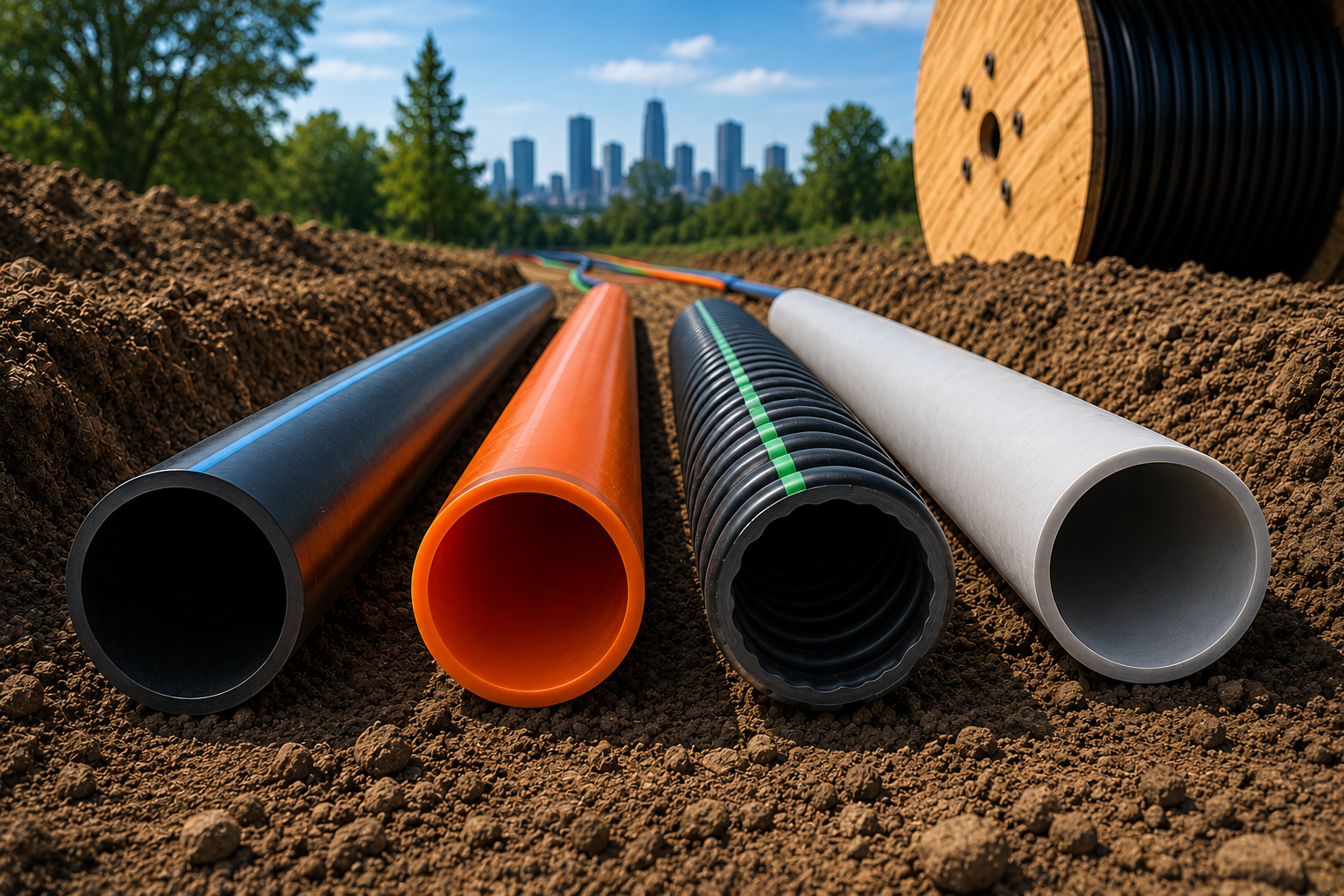
- Smoothwall HDPE Conduit: Features flat inner and outer wall surfaces. It is the standard choice for open trenching, direct plowing, and horizontal directional drilling (HDD).
- Interior Ribbed HDPE Conduit: Features a smooth outer wall paired with raised longitudinal ribs extruded along the interior surface.
- Corrugated Conduit: Features a ringed, wave-like wall profile on both interior and exterior surfaces. It is lightweight and flexible, but lacks a certified Standard Dimension Ratio (SDR) wall thickness for load-bearing buried applications.
- Rigid PVC / Metallic Conduit: Consists of traditional 10-to-20-foot rigid “sticks” of PVC or metal requiring solvent-welded or threaded couplings at every joint.
2. How do internal ribs vs. corrugations affect cable-pulling friction?
Cable friction depends on the contact surface area between the cable jacket and the inner conduit wall:
- Smooth wall: Under pulling tension, a heavy cable jacket flattens against the flat wall, creating surface-to-surface area contact and standard friction levels.
- Interior Ribbed: Longitudinal internal ribs elevate the cable off the main conduit wall, converting surface-to-surface contact into narrow parallel lines of contact. This reduces the Coefficient of Friction (CoF) and helps dissipate heat during long pulls.
- Corrugated: The internal ringed ridges reduce surface contact on short manual pulls. However, the internal valleys between ridges accumulate dirt, silt, and debris over time, which increases mechanical drag on cables over longer distances.
3. Which conduit profile is suitable for cable jetting and air-assisted blowing?
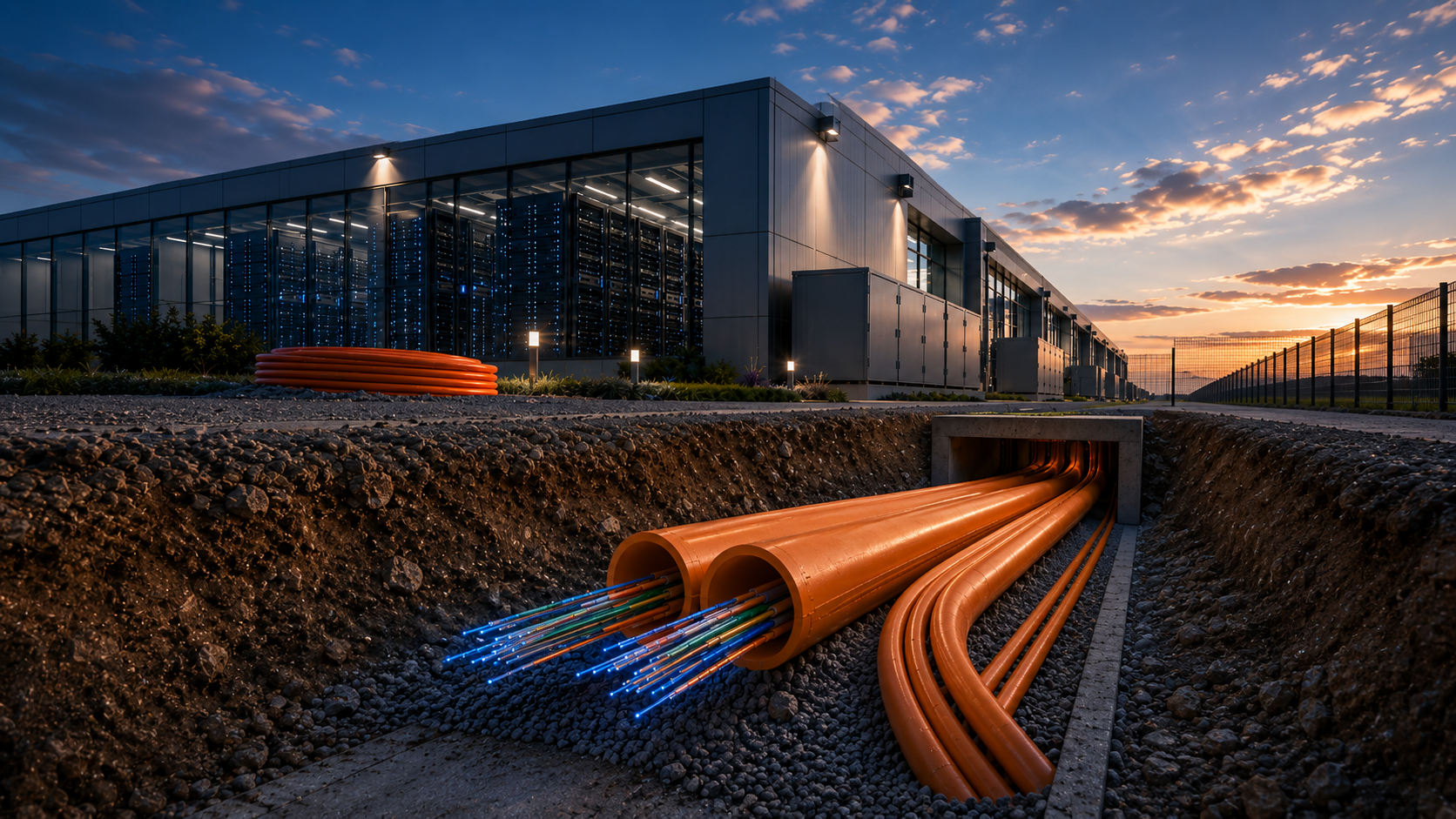
Interior ribbed HDPE is specifically engineered for long-distance cable jetting. The continuous channels between the longitudinal ribs allow high-pressure air streams to pass around the cable rather than becoming trapped beneath it. This maintains a turbulent boundary layer of airflow that helps float lightweight fiber optic cables deeper into the run with reduced pushing force.
- Smooth wall HDPE: Performs reliably for short-to-medium air pushes.
- Corrugated Conduit: Not recommended for cable jetting. The internal ringed corrugations disrupt high-velocity air streams, creating air turbulence that stalls the cable during jetting operations.
4. Where is Corrugated Conduit used in Telecommunications?
Corrugated duct is not specified in outdoor plant (OSP) telecom builds. It is rarely used in short indoor premise (ISP) runs or non-critical, short innerduct placements inside existing rigid casings (typically under 1,000 feet).
Because of its ringed design, corrugated duct exhibits minimal coil memory and a tight bending radius, allowing it to navigate tight corners inside equipment vaults without heat-bending tools. However, due to its thin wall structure, susceptibility to air turbulence, and tendency to collect dirt in its internal valleys, it is not used for main outdoor plant fiber backbones, long-haul cable jetting, or direct burial.
Corrugated Conduit is primarily used in the agricultural, drainage, and municipal waste industries.
5. Can Corrugated Conduit be used for Horizontal Directional Drilling (HDD) or direct burial?
No. Corrugated conduit should not be used for directional boring or direct burial in load-bearing trenches:
- HDD Pullback Limitations: The external ridges drag heavily against the borehole wall, generating high mechanical friction. Under pullback tension, thin-walled corrugated duct can stretch, deform, or snap.
- Direct Burial Limitations: Corrugated conduit lacks certified SDR heavy-wall crush resistance, leaving it vulnerable to flattening under soil settlement or rock impingement.
- Directional Boring Standard: For directional drilling and direct burial, utility specifications require solid-wall Smoothwall or “Smooth-Out / Ribbed-In” HDPE conduit with a certified SDR rating (such as SDR 9, SDR 11, or SDR 13.5).
6. What are the operational differences between Rigid PVC sticks and continuous HDPE reels?
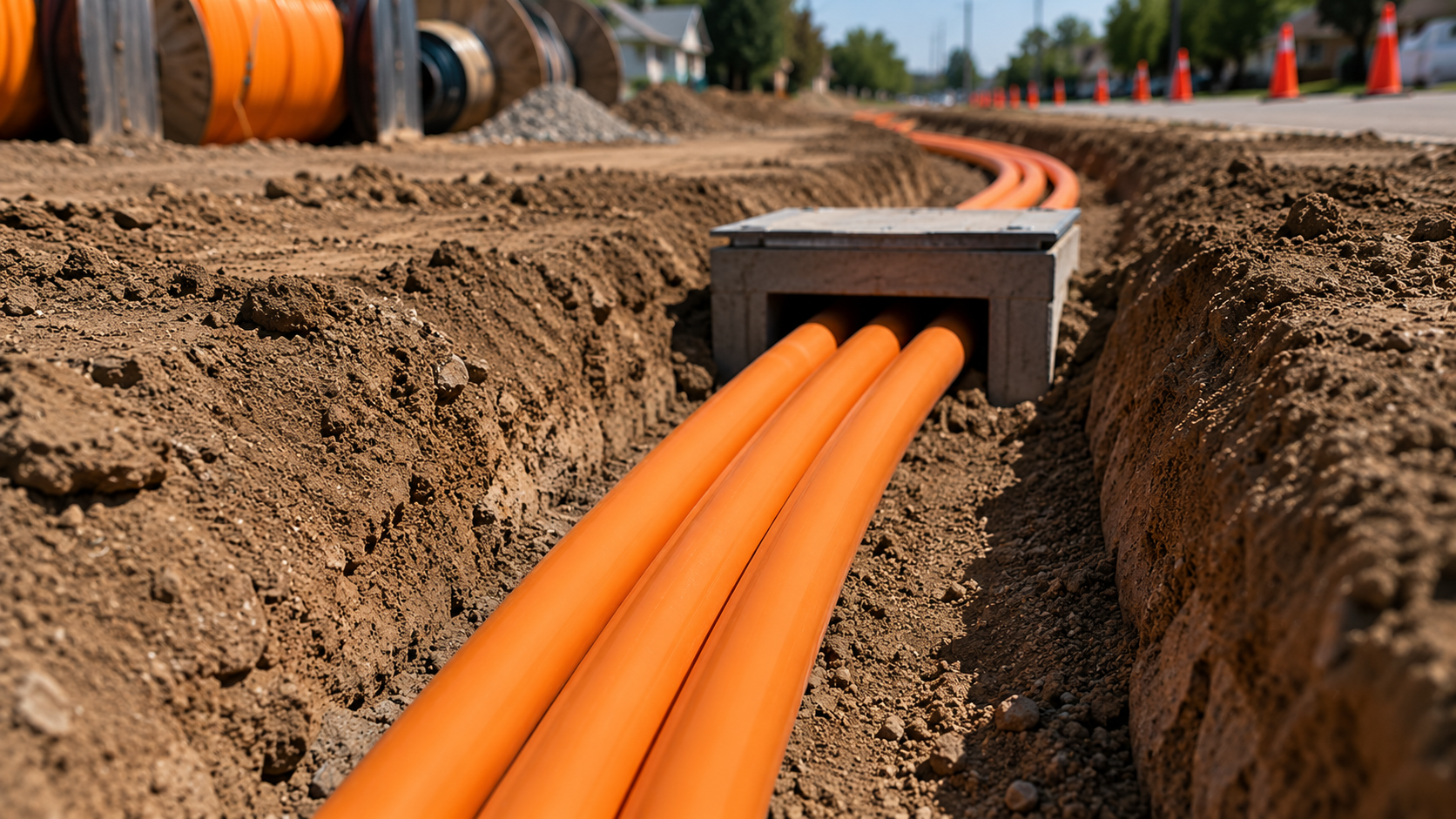
Rigid PVC stick conduit requires crews to apply solvent cement or thread a coupling every 10 to 20 feet. Every joint represents a potential entry point for water or silt, a structural weak point during ground movement, and an internal ridge that can catch pull heads or cable jackets.
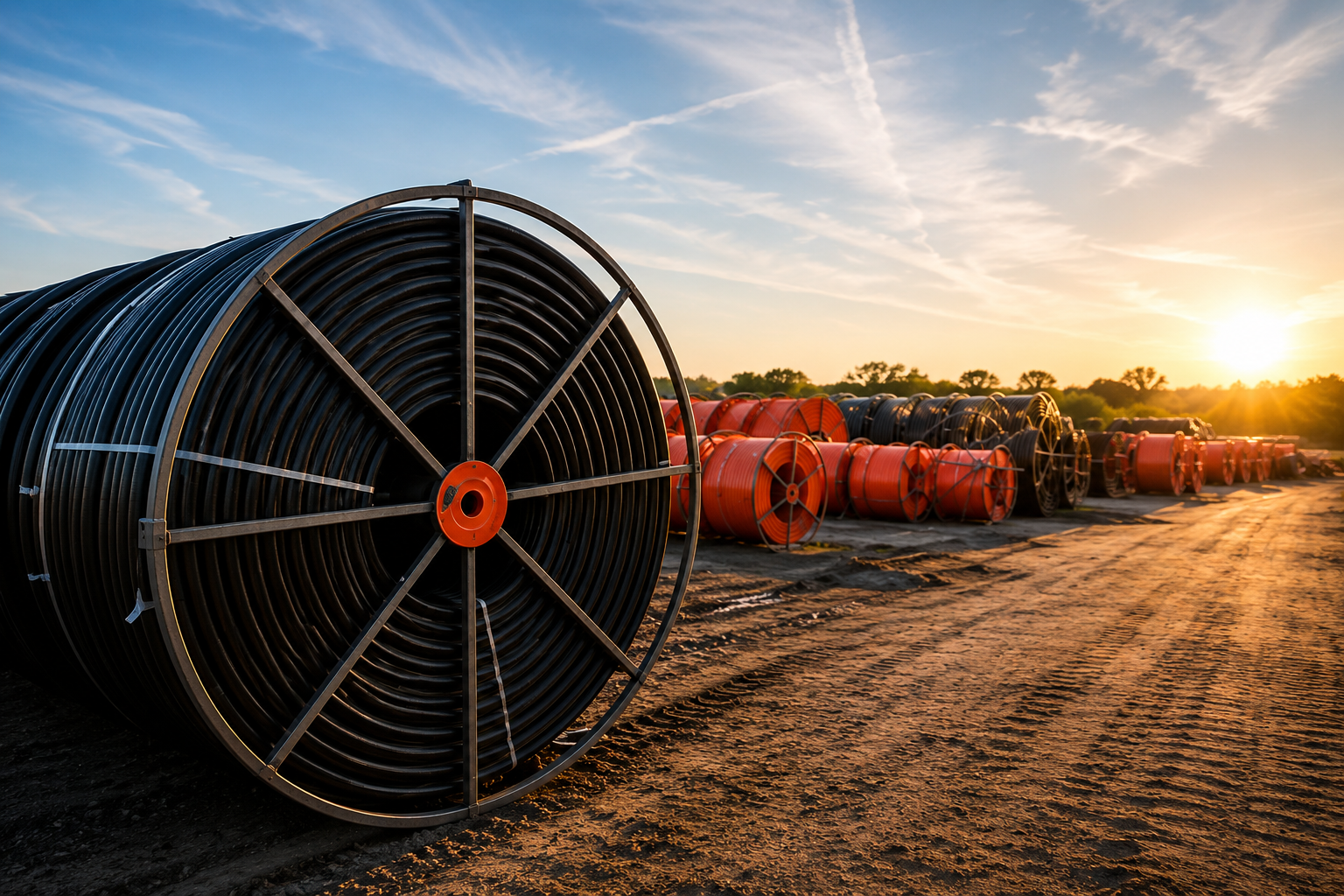
Continuous HDPE conduit from Creek Plastics ships on reels reaching thousands of feet. This eliminates up to 95% of field joints, cuts trench labor requirements, and provides an uninterrupted pathway for cable placement.
7. How does APWA color coding work across HDPE conduit choices?
Color coding protects underground infrastructure and identifies raceway owners in shared trenches. Under the APWA (American Public Works Association) uniform color code:
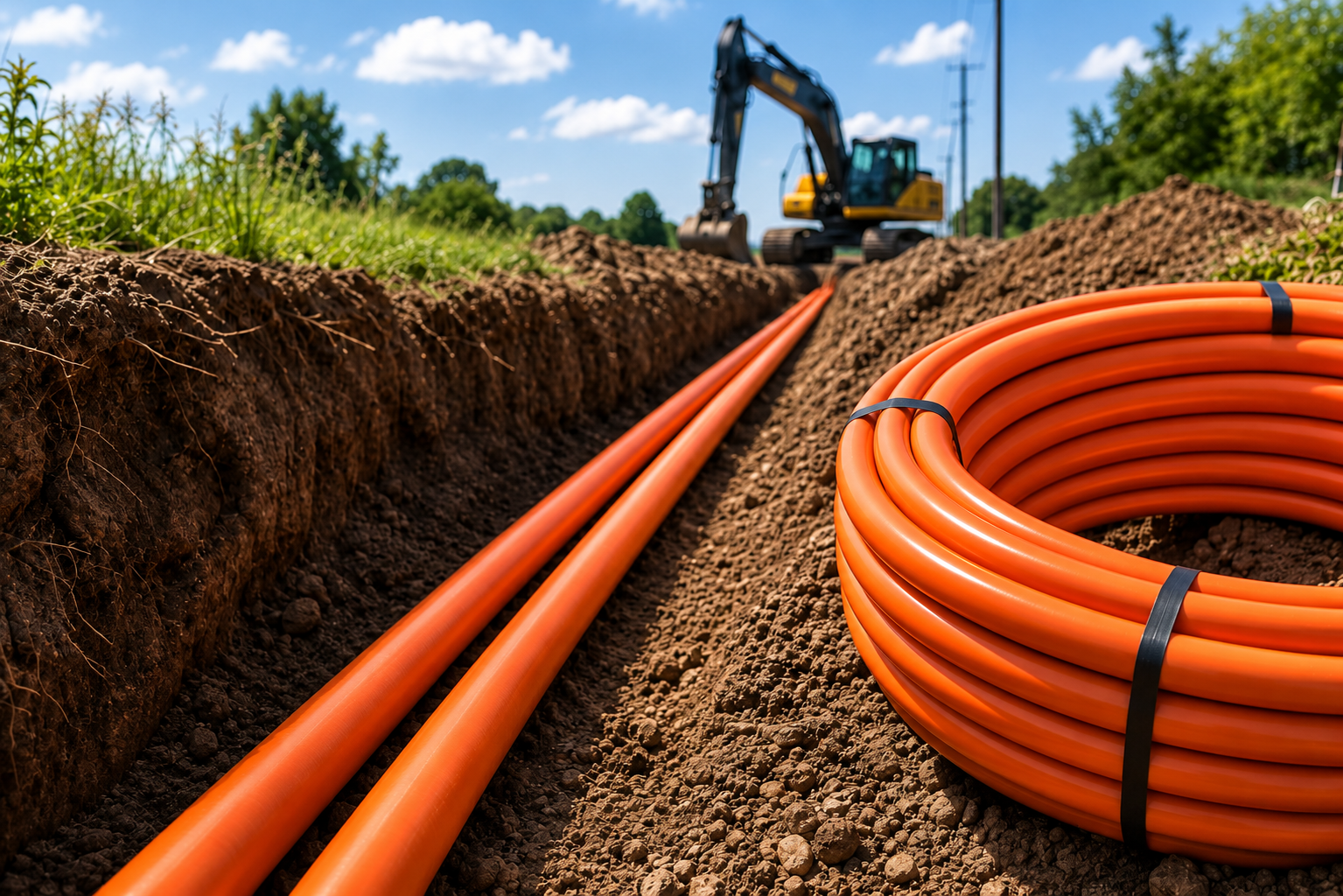
- Orange: Telecommunications, Fiber Optic, and CATV Lines
- Red: Electric Power Distribution & Lighting
- Blue: Potable Water / Municipal Infrastructure
- Green: Sewers & Drain Lines
Creek Plastics manufactures solid-colored conduit as well as solid black conduit extruded with co-extruded longitudinal stripes (such as 3-stripe or 4-stripe configurations). Custom stripe counts allow telecom crews to identify individual pathways within a multi-duct bundle easily.
8. How do you evaluate conduit profile choices for job site cost efficiency?
- For standard open trenching or short service drops: Smoothwall HDPE provides a cost-effective material baseline.
- For long-haul fiber builds, 5G backhaul, and directional bores: Interior Ribbed HDPE delivers lower total installed costs. The reduction in pulling and jetting friction enables longer cable runs between access vaults, reducing the number of intermediate splice locations and field assist crews.
Creek Plastics manufactures smoothwall and interior ribbed HDPE conduit in Tecumseh, Michigan, using 100% virgin resin compounds. We supply telecom, power utility, and municipal markets with custom SDR wall choices, APWA color-coding, longitudinal striping, and factory-installed pull tape to match your project specifications.
Contact our Tecumseh sales team today to request a quote or discuss continuous reel packaging options for your upcoming build.