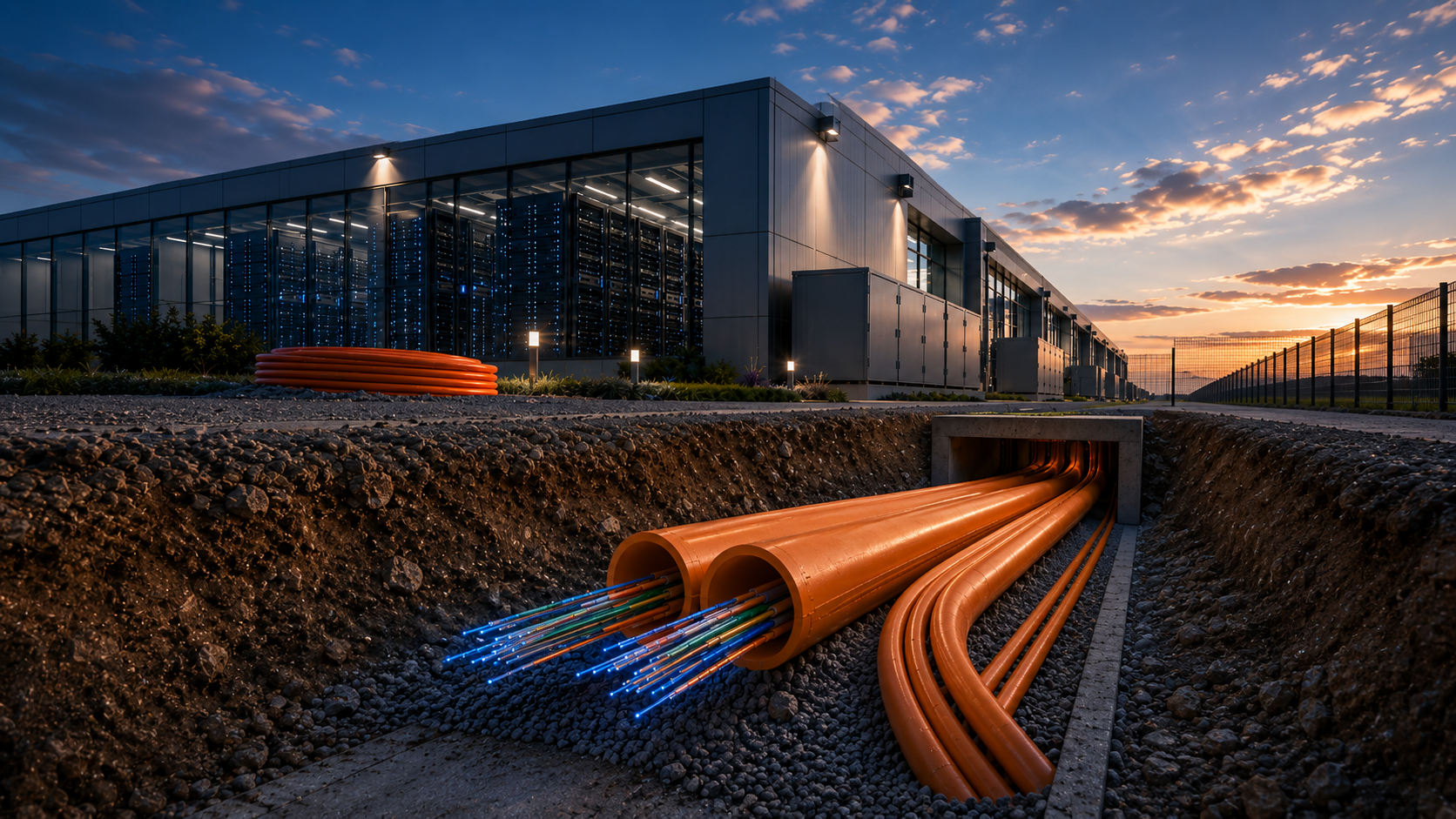
Data center architecture is governed by a single metric: uptime. To maintain 99.999% reliability (“five 9s” uptime), facility engineers scrutinize every component of the physical plant for potential failure points. While mechanical rooms and server halls traditionally rely on rigid metallic piping and standard PVC, High-Density Polyethylene (HDPE) has become a primary engineering specification for underground infrastructure, fiber optic routing, and external utility loops.
To evaluate whether HDPE is appropriate for high-tier data center deployment, it is necessary to examine exactly where this material is used, how it performs against alternative materials, and what real-world projects prove its viability.
Where Exactly is HDPE Used in a Data Center?
Data centers do not use standard thermoplastic piping inside the white space (server halls) where high-temperature metallic or specialized clean-room containment systems dominate. Instead, HDPE is deployed in two critical infrastructure zones:
- Outside Plant (OSP) Fiber Optic Conduits
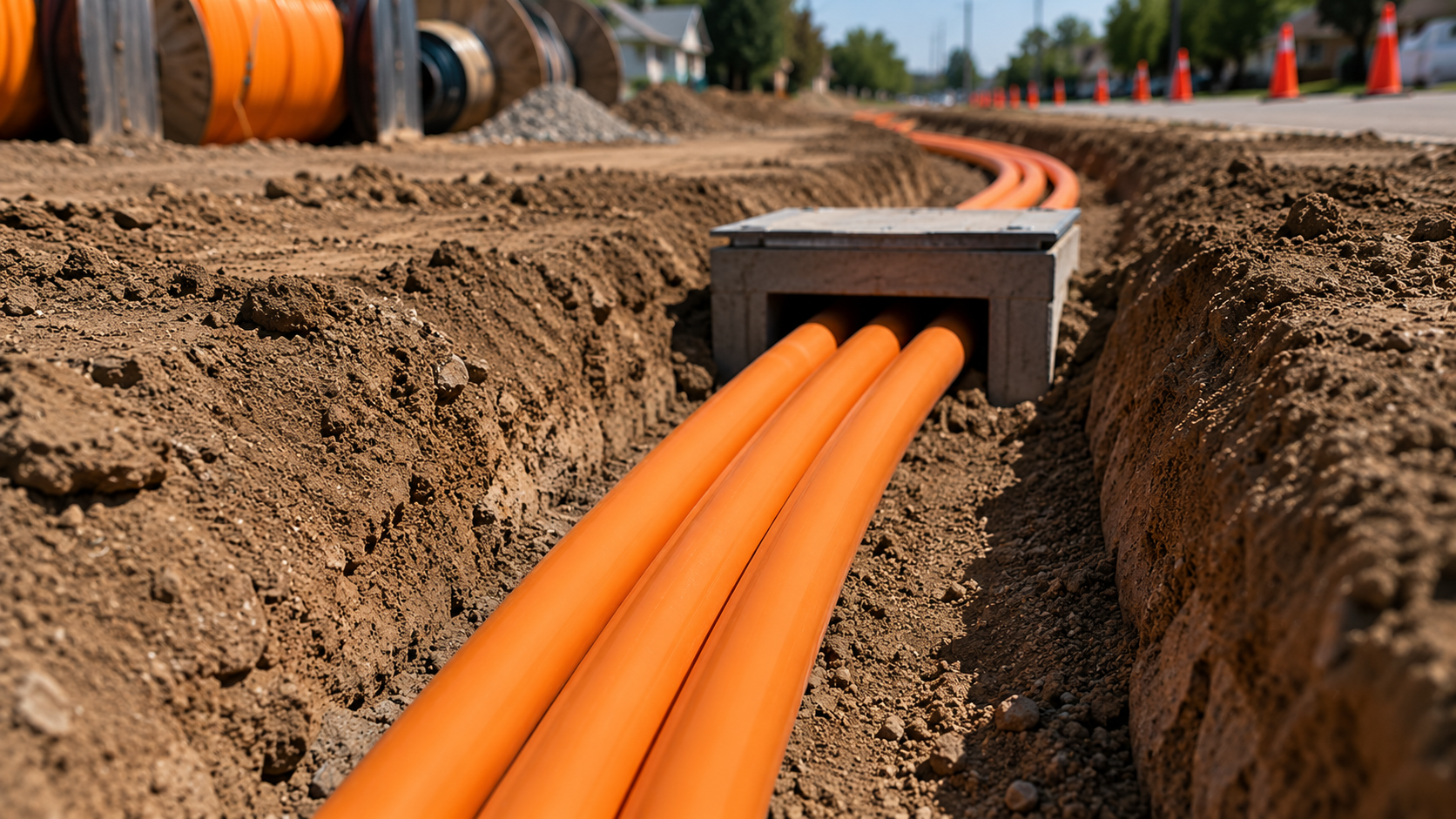
A data center is functionally useless without high-count fiber connectivity to regional telecom backbones. HDPE conduit (typically in the 1-inch to 4-inch diameter range) is the standard protective envelope for these cables.
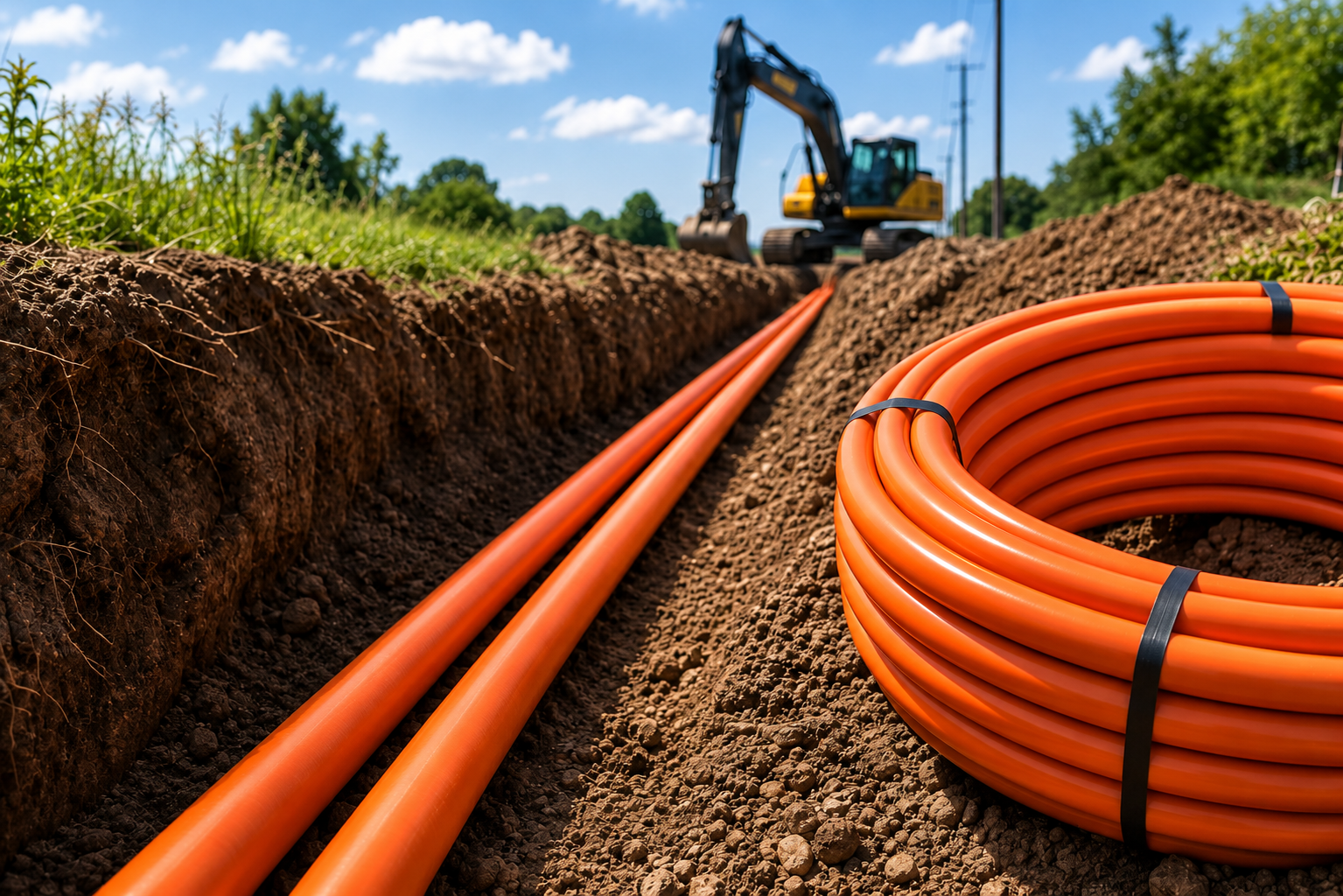
- Horizontal Directional Drilling (HDD): Data centers are frequently built near existing highways, wetlands, or built-up infrastructure. Instead of open-trench digging, contractors use HDD to bore underground pathways. Continuous, jointless HDPE conduit is pulled through these bores over thousands of feet to house incoming fiber lines safely.
- Buried Fire Mains and Condenser Water Loops
Outside the building envelope, data centers require massive industrial cooling operations—often consuming millions of liters of water daily for thermal management.
- External Loops: HDPE is used to transport condenser water between external cooling towers, chiller plants, and the building entry point.
- Fire Suppression Infrastructure: Buried fire water loops must remain continuously pressurized. HDPE is widely specified here because it complies with Factory Mutual (FM) 1613 standards for fire protection fluid distribution.
The Alternatives: How HDPE Compares
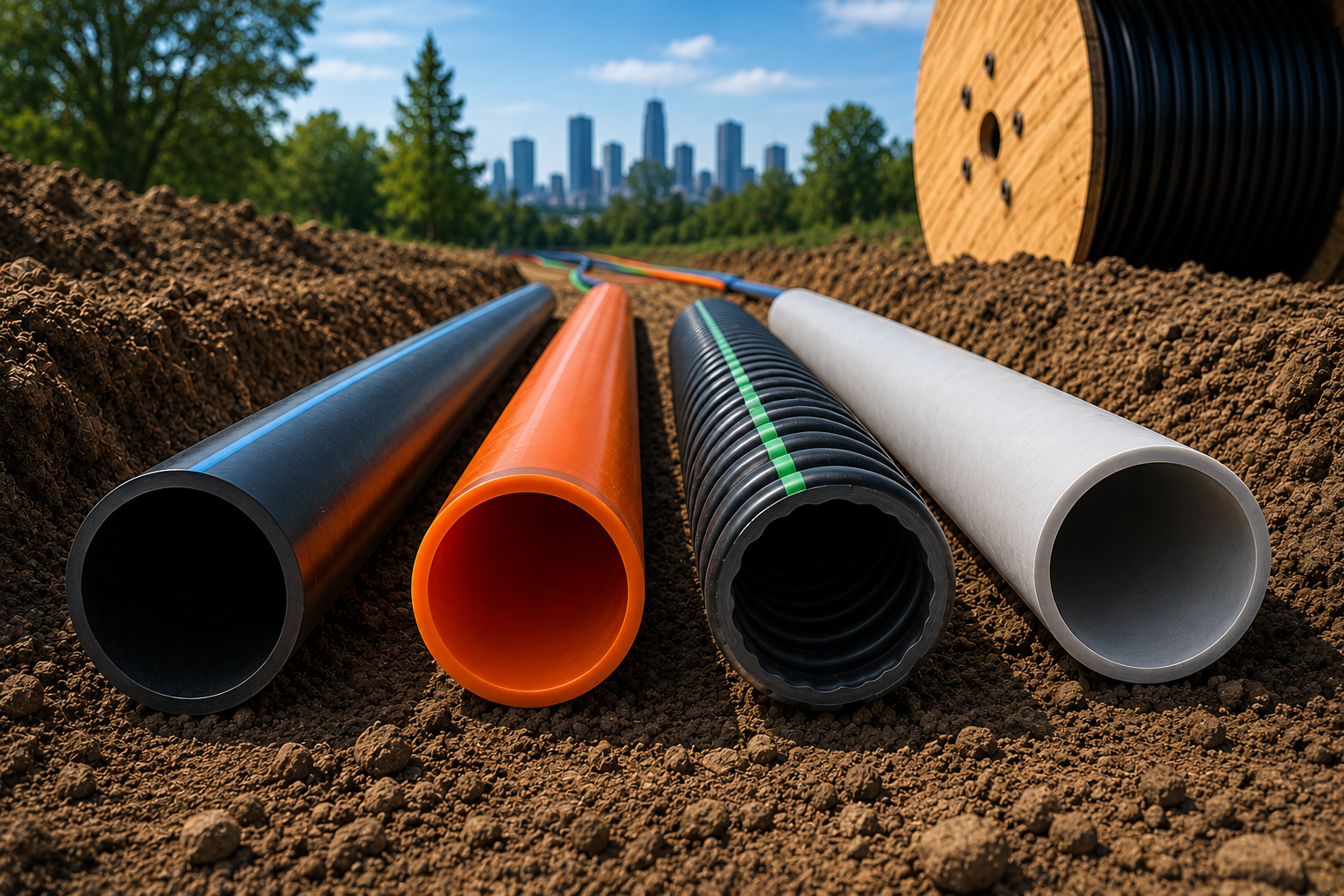
When specifying underground infrastructure, engineers generally choose between three primary material classes: HDPE, PVC (Schedule 40/80), and Metallic Piping (Rigid Galvanized Steel or Carbon Steel).
| Engineering Attribute | High-Density Polyethylene (HDPE) | Polyvinyl Chloride (PVC) | Rigid / Carbon Steel |
|---|---|---|---|
| Primary Joining Method | Butt Heat Fusion / Electrofusion | Solvent Welding | Threading / Arc Welding |
| Joint Leak Risk | Low — monolithic fused joints function as a single continuous pipe | Moderate — solvent joints can degrade or shear under ground movement | High — threaded or welded joints are susceptible to localized stress and corrosion |
| Installation Flexibility | High — naturally bends around subterranean obstacles | Brittle — requires manufactured elbows and can crack under directional stress | Rigid — requires precise mechanical fittings and is labor-intensive |
| Corrosion Resistance | Immune to oxidation, scaling, and acidic soil chemistry | Immune to chemical corrosion, but susceptible to long-term UV embrittlement | Highly susceptible — requires expensive cathodic protection wraps underground |
| Trenchless Capability | Excellent — high tensile strength allows continuous long-run pulls | Poor — cannot withstand the pulling forces required for long directional bores | Limited — heavy, rigid, and requires welding segments during the pull |
Real-World Proof: Case Studies in Data Center Deployment
The adoption of HDPE is well-documented across hyperscale and enterprise data center projects globally.
Case Study 1: US Hyperscale Center Fiber Backbone
A major data center development in the United States required the installation of multiple underground fiber-optic lines to connect its primary servers with regional telecom backbones. Because open-trench excavation was impossible due to active creeks and protected wetlands, contractors utilized Horizontal Directional Drilling.
- The Material: Engineers specified 165,000 feet of 4-inch solid-wall HDPE conduit.
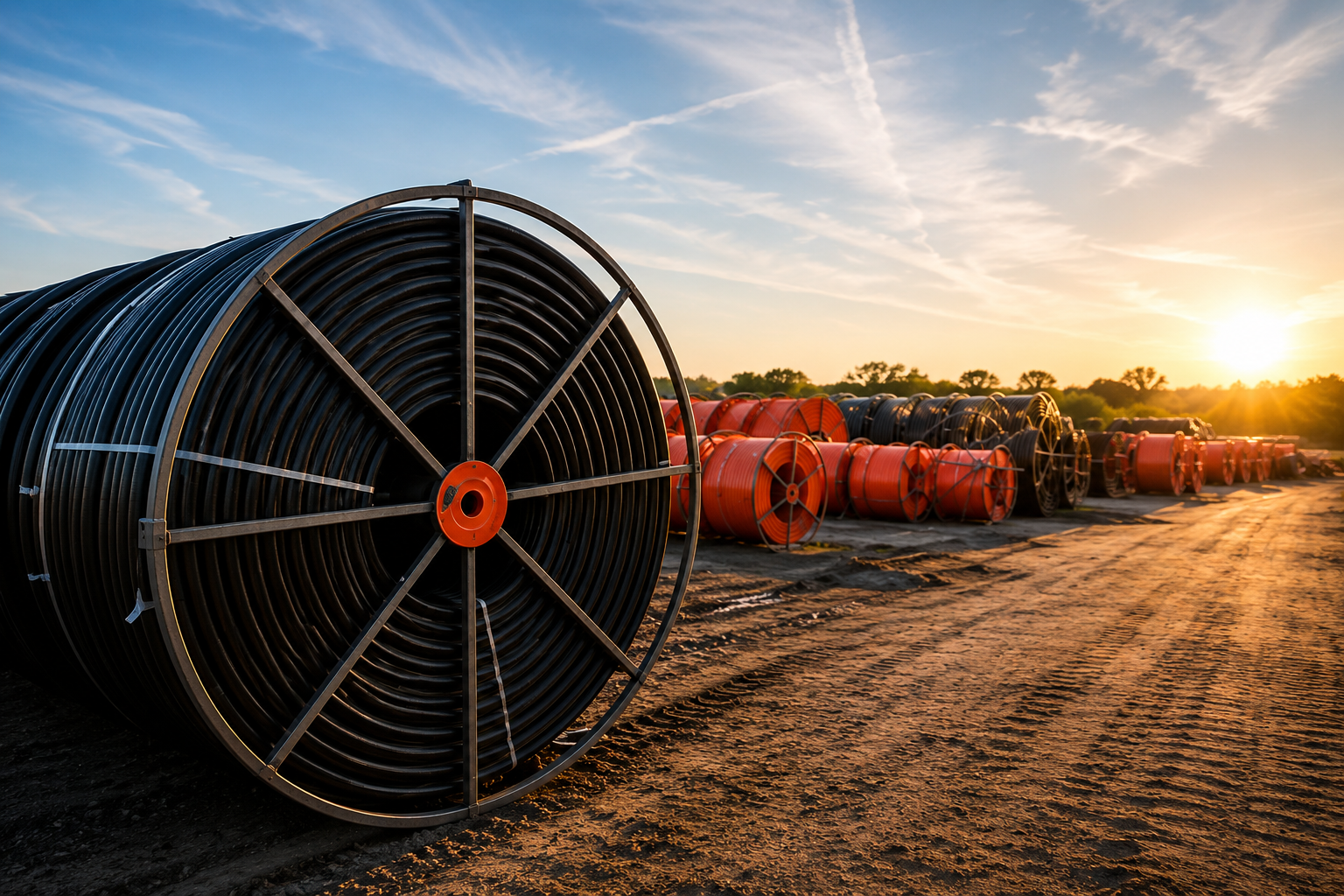
- The Execution: The conduit was delivered on large reels (1,250 feet per reel) to eliminate mid-run joints. Using an advanced bore device, the field crew successfully pulled 24 individual conduit strings concurrently through 400-foot segments. The high tensile strength of the HDPE prevented any structural stretching or buckling under the 20,000 to 24,000 lbs of drag force applied during the pull.
Case Study 2: The NARRA1 Carrier-Neutral Data Center (Philippines)
For the central cooling water loops of the largest carrier-neutral data center in the Philippines, the engineering team deliberately converted the traditionally specified metallic piping networks to corrosion-free HDPE.
- The Outcome: Crews heat-fused over four kilometers of piping and 11,000 individual fittings. The switch to a lighter polymer system significantly reduced the structural dead-weight on the building frame and eliminated the risk of interior scaling, which routinely degrades pump efficiency in traditional steel configurations.
Disclaimer
This report is provided for informational purposes only and does not constitute business, financial, or purchasing advice. Creek Plastics assumes absolute zero liability for any direct, indirect, or consequential losses, damages, business decisions, or legal claims resulting from the use of or reliance on this material.
The market data, statistics, and industry insights presented herein are compiled and aggregated from external, third-party public sources. Creek Plastics claims no ownership, proprietary rights, or original authorship over this third-party information; all credit, intellectual property, and copyrights belong entirely to their respective original sources and authors. While this information is gathered from sources believed to be reliable, Creek Plastics makes no guarantees regarding its accuracy, completeness, or timeliness.
Furthermore, any quotes, statements, or commentary attributed to specific individuals, public figures, or corporate executives (including those from external companies) are derived from public records, earnings calls, or media reports and are provided “as-is.” Creek Plastics does not warrant the literal accuracy, completeness, or context of these third-party statements and explicitly disclaims any liability for inadvertent misquotes, transcription errors, or mischaracterizations.