How to Cut Material Costs: UL vs. Non-UL HDPE Conduit Code Rules
You do not always need UL-listed HDPE pipe for underground utility and telecom projects. By understanding when local building codes strictly mandate UL listing versus when industry-standard ASTM or NEMA specification pipe is permitted, contractors and engineers can cut project material costs without compromising strength, safety, or service life.
UL vs. Non-UL HDPE: What Are You Actually Paying For?
The primary distinction between UL-listed and non-UL HDPE conduit comes down to third-party certification overhead, not necessarily raw resin quality.
- UL-Listed HDPE Conduit (UL 651A / UL 651B): Manufactured and tested under continuous third-party surveillance by Underwriters Laboratories (or ETL). It certifies compliance with standards like UL 651A (Schedule 40 and 80 HDPE) or UL 651B (Continuous Length HDPE Conduit). The listing mark guarantees that the manufacturing facility undergoes regular audits and rigorous batch testing for flammability, impact, and dimensional tolerances.
- Non-UL HDPE Conduit (ASTM F2160 / NEMA TC 7): Produced using high-density polyethylene resins meeting the same core physical property cell classifications (such as ASTM D3350). These conduits are tested in-house to meet recognized consensus standards—most notably ASTM F2160 (Standard Specification for Solid Wall HDPE Conduit) and NEMA TC 7 (Smooth-Wall Coilable PE Electrical Plastic Conduit).
Both types offer high flexibility, crush resistance, tensile strength, and low coefficients of friction ideal for cable pulling or jetting. However, UL-listed conduit carries a price premium due to testing, licensing, and facility audit fees required to maintain the UL mark.
When Is UL Listing Mandatory For Conduit?
3 Red Flags in Your Project Specs
UL listing is strictly required whenever an installation falls under the jurisdiction of the National Electrical Code (NEC) and local code enforcement.
How to Know if UL is Required:
- Check the Project Specifications & AHJ: The ultimate decision-maker is the Authority Having Jurisdiction (AHJ)—typically the local municipal electrical inspector or plan reviewer. If the contract specifies NEC compliance or explicitly calls out “UL-listed raceways,” UL conduit must be used.
- Inside Plant (ISP) and Building Entries: Under NEC Article 353, HDPE conduit entering a building beyond a specific distance past the exterior wall must transition to an approved code-compliant, fire-rated raceway or use UL-listed premise materials.
- Commercial & Industrial Electrical Distribution: Customer-owned electrical raceways on commercial properties generally require UL 651A/B conduit to pass local building inspections.
4 Real-World Applications Where You Can Ditch UL and Save Big On HDPE Conduit Projects
You can substitute non-UL HDPE conduit in applications that are exempt from NEC jurisdiction or governed by utility/telecom engineering standards rather than municipal building codes.
Ideal Applications for Non-UL Conduit:
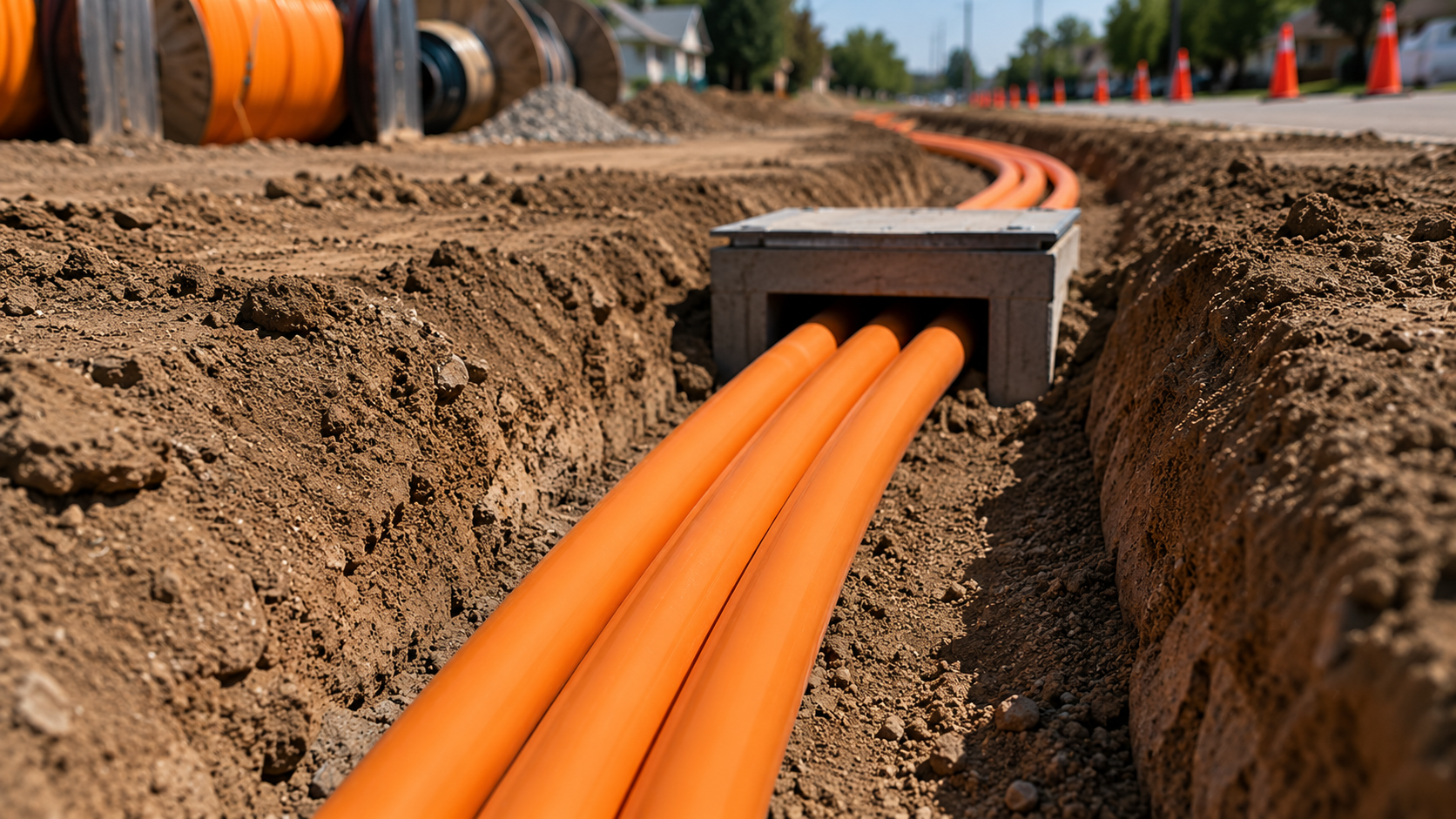
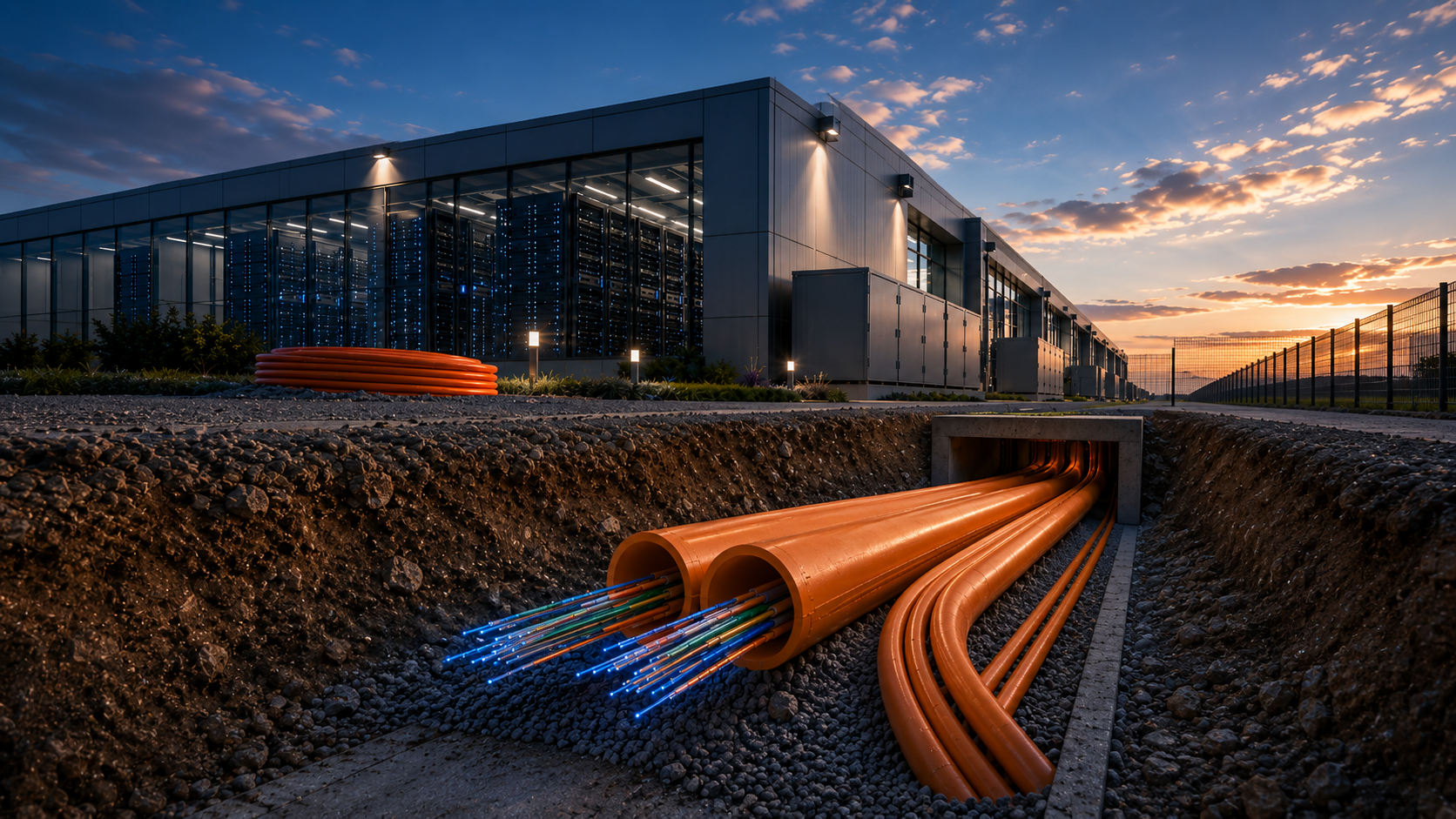
- Outside Plant (OSP) Telecommunications & Broadband: Fiber optic backbones, FTTH (Fiber to the Home), and CATV networks running in public rights-of-way or private easements.
- Electric Utility Infrastructure: Utility-owned power distribution lines (substation-to-transformer or primary distribution) that follow National Electrical Safety Code (NESC) guidelines rather than local NEC inspector rules.
- DOT and Highway Lighting Projects: State and federal highway applications governed by Department of Transportation (DOT) engineering specs that mandate ASTM F2160 or NEMA TC 7 compliance.
- Directional Boring & Agricultural/Irrigation: Sub-surface crossings where the conduit acts purely as a mechanical protection sleeve for non-NEC governed cables.
3 Major Operational Reasons to Swap to Non-UL Conduit
Substituting non-UL pipe when allowed by code offers significant financial and operational advantages:
- Direct Cost Savings: Non-UL conduit meeting ASTM F2160 avoids the third-party licensing markups associated with UL certifications, yielding noticeable savings on high-footage projects.
- Better Lead Times & Availability: Because manufacturing runs do not require specific UL listing scheduling, non-UL conduit can often be produced and shipped faster in bulk quantities.
- Greater Customization Options: Non-UL conduit allows for greater flexibility in custom lengths, wall thicknesses (SDR 9, SDR 11, SDR 13.5), custom colors, and longitudinal striping combinations for duct identification.
The Engineer’s Substitution Matrix: What Should You Buy Instead?
UL vs. Non-UL HDPE Conduit Substitution Reference Guide
Use this reference table when converting UL specifications to cost-effective ASTM/NEMA consensus standards and matching them to Creek Plastics’ specialized conduit profiles:
| Specified UL Standard / Application | Direct Non-UL Consensus Standard | Recommended Creek Plastics Profile | Primary Field & Cost Advantage |
| UL 651A / 651B Schedule 40
(Commercial Power Feeders & General Underground) |
ASTM F2160 Schedule 40
or NEMA TC 7 EPEC-40 / ASTM F2160 SDR 13.5 |
Smoothwall or “Smooth-Out / Ribbed-In” SDR 13.5 | Eliminates UL licensing markup. Continuous reels eliminate up to 90% of field couplings. Internal ribs reduce cable pulling CoF. |
| UL 651A / 651B Schedule 80
(Heavy Traffic Crossings, HDD Bores & Deep Cover) |
ASTM F2160 Schedule 80
or NEMA TC 7 EPEC-80 / ASTM F2160 SDR 11 or SDR 9 |
Heavy-Wall Smoothwall SDR 11 or SDR 9 | High ring stiffness and hoop strength for directional drilling pullback and heavy soil loads without third-party fees. |
| UL Rigid PVC Stick Conduit
(Traditional 10–20 ft. glued PVC sticks in OSP/DOT runs) |
ASTM F2160 IPS Solid Wall
or NEMA TC 7 EPEC-B |
Continuous Reel Smoothwall HDPE (APWA Color-Coded) | Replaces rigid glued sticks with continuous flexible reels. Cuts trenching labor and eliminates water/silt intrusion points. |
| UL-Listed Innerduct
(Subdividing larger casings or short vault pulls) |
ASTM F2160 or NEMA TC 7 Flexible Duct | Corrugated HDPE Innerduct | Maximum flexibility in tight manholes/handholes with near-zero coil memory for fast short-run innerduct pulls. |
| Locatable Utility Runs
(Buried dielectric fiber needing electronic surface tracing) |
ASTM F2160 with Integrated Tracer Conductor | Toneable HDPE Duct (Embedded 18 AWG / 22 AWG Copper Conductor) | Eliminates the labor of hand-taping separate tracer wire in the trench; allows fast electronic surface locating. |
Key Non-UL Specification Standards Explained
When submitting material approval sheets to project engineers, specify these primary consensus standards:
- ASTM F2160: The primary benchmark for solid-wall HDPE conduit based on controlled Outside Diameter (OD/IPS). It governs material cell classification, dimensional tolerances, impact resistance, and workmanship for non-pressure underground raceways.
- NEMA TC 7: Covers smooth-wall coilable polyethylene electrical plastic conduit (such as EPEC-B, EPEC-40, and EPEC-80) intended for underground power and communications distribution.
- ASTM D3035 / D2239: Controlled OD and ID specifications widely accepted across municipal, industrial, and heavy utility infrastructure builds.
Before finalizing your next project bid, check with your project engineer or local utility to verify if NEC rules apply. If the run is Outside Plant (OSP), electric utility distribution, or state DOT infrastructure, substituting ASTM F2160 or NEMA TC 7 compliant HDPE conduit from Creek Plastics keeps material budgets under control without sacrificing long-term reliability.
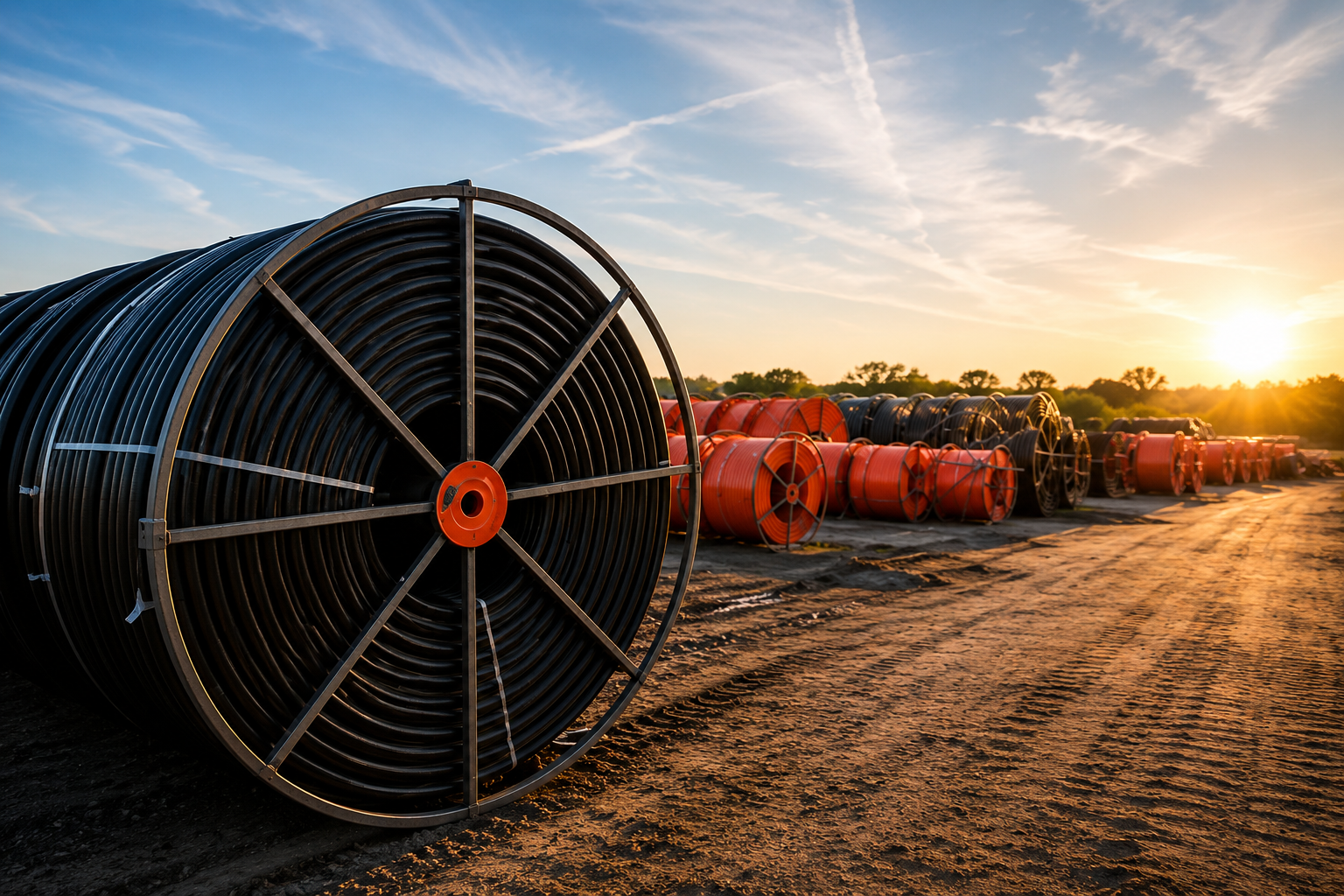
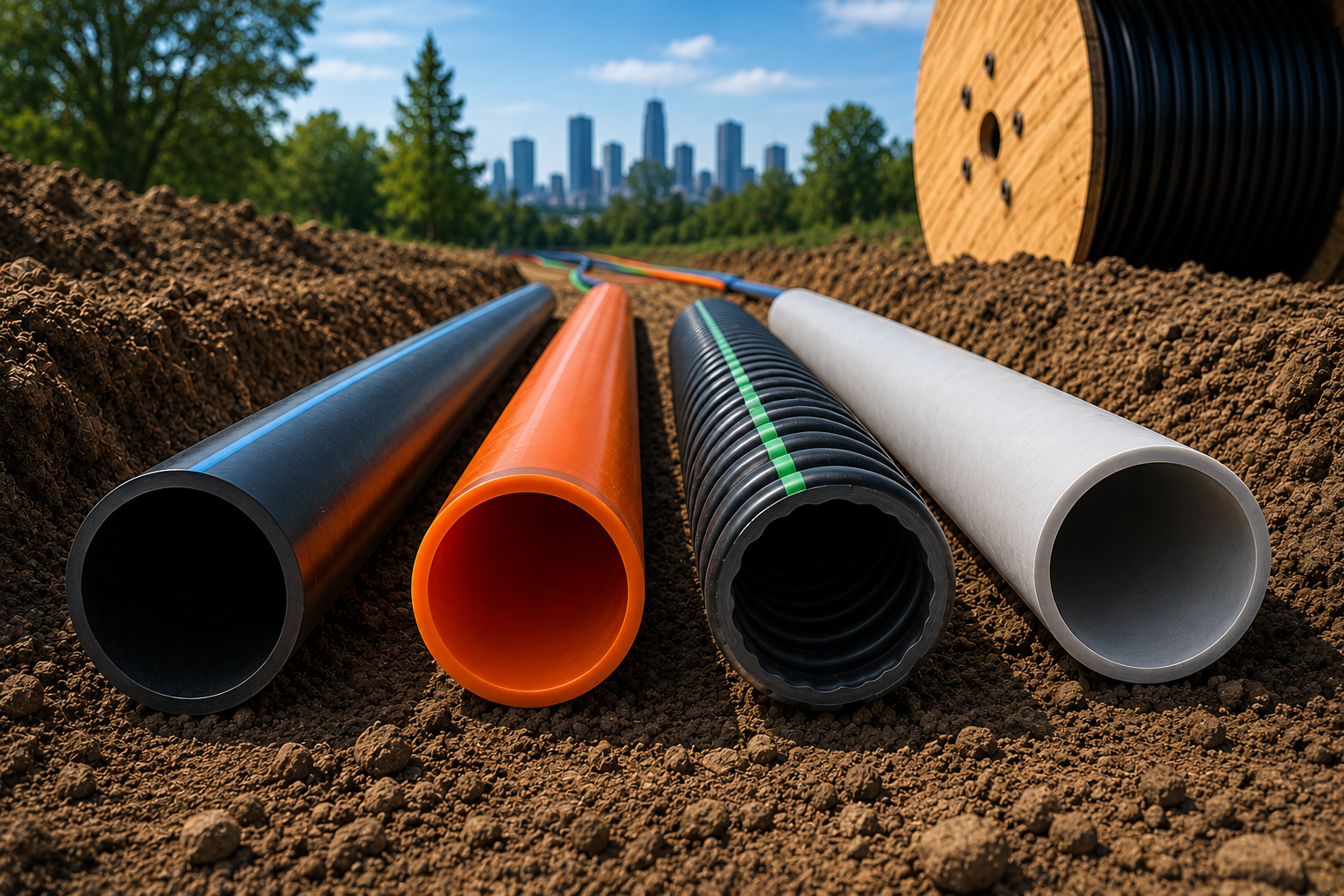
At Creek Plastics in Tecumseh, Michigan, we manufacture smoothwall, ribbed, corrugated, toneable, and APWA color-coded HDPE conduit shipped on continuous reels to fit your exact job site specs. Reach out to our Tecumseh sales team today for custom SDR quotes, reel packaging options, or factory-installed pull tape.