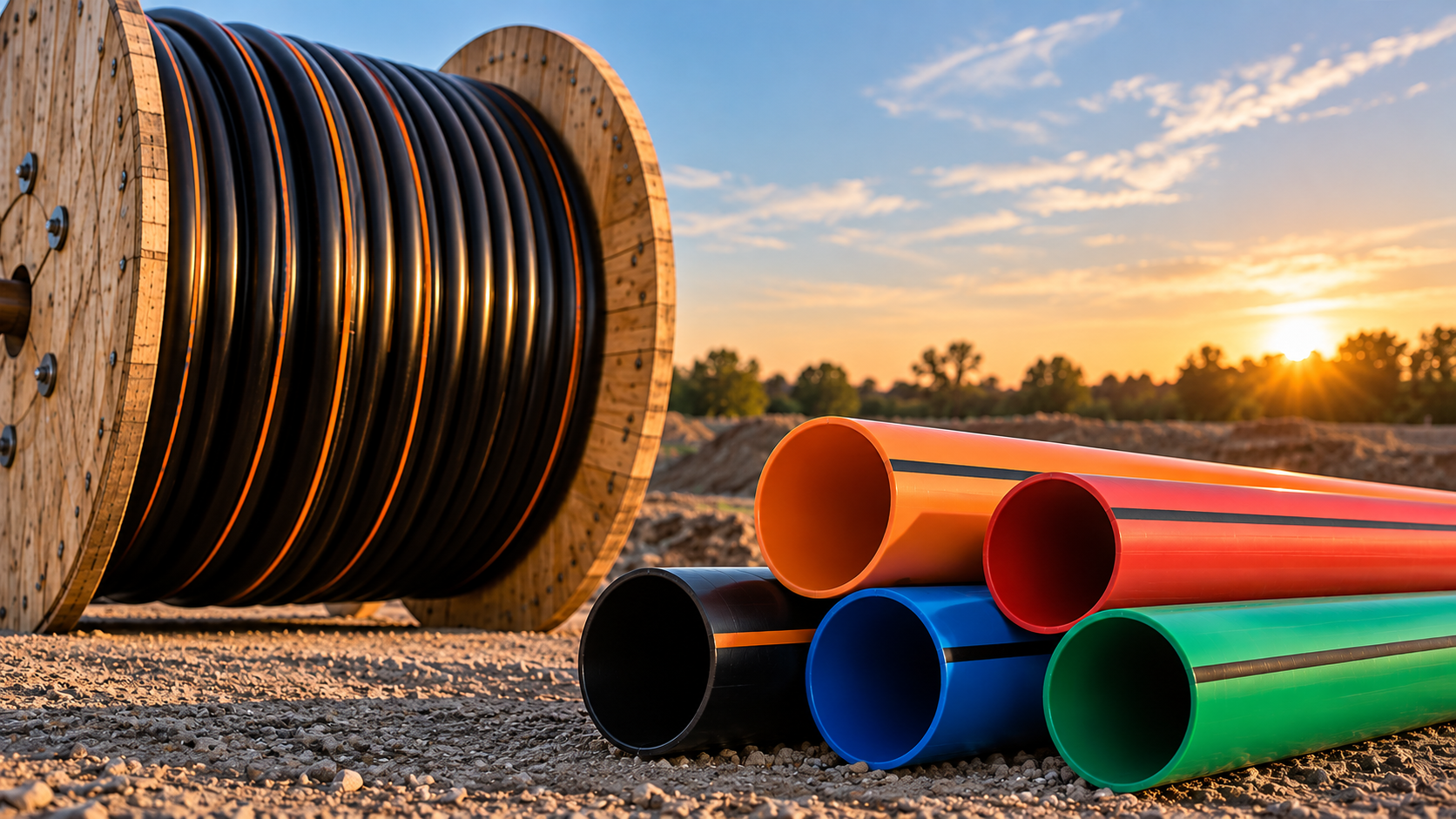
This article will cover all of the basic foundational knowledge associated with HDPE pipe to help you understand what’s best in your next project.
1. How is HDPE Conduit Physically Measured?
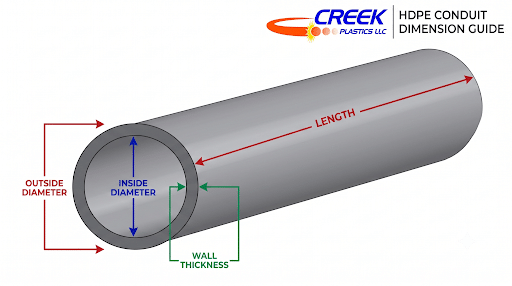
Properly specifying High-Density Polyethylene (HDPE) conduit requires a clear understanding of industry sizing conventions, material standards, print line coding, and field delivery formats. For procurement teams, engineers, and project managers, evaluating these fundamental variables upfront ensures long-term structural reliability, code compliance, and efficient cable installation.
2. What Are The Markings On The Side Of HDPE Pipe
How to Read the Print Line on HDPE Pipe
Every production run of HDPE conduit features continuous inkjet markings printed along the outer wall at intervals not exceeding 5 feet. This print line delivers essential field traceability and material verification
Break Down Example:
CREEK PLASTICS 2″ IPS SDR 11 HDPE CONDUIT ASTM F2160 LOT 042626 1250 FT
- Manufacturer & Nominal Size: Identifies the producer and trade size (e.g., 2-inch Iron Pipe Size).
- Sizing Standard: Indicates the outer diameter sizing convention (IPS, DIPS, or CTS) or inner diameter convention (SIDR).
- Wall Rating / SDR: Defines the wall thickness schedule or Standard Dimension Ratio (e.g., SDR 11 or Schedule 40).
- Material & Standard: Confirms polymer composition (HDPE) and compliance with standard specifications, such as ASTM F2160 for solid-wall conduit or NEMA TC 7.
- Lot Run Code: Provides backward traceability to the specific resin lot, density parameters, and melt index testing recorded during manufacturing.
- Sequential Footage Markings: Allows installation crews to monitor payout progress, track trench distance, and minimize material waste.
3. APWA Color Coding and Striping Rules For HDPE Pipe
What Pipe Color Do You Need?
Underground utility pathways are color-coded in accordance with the American Public Works Association (APWA) Uniform Color Code to identify line contents and distinguish raceway ownership in shared trenches:
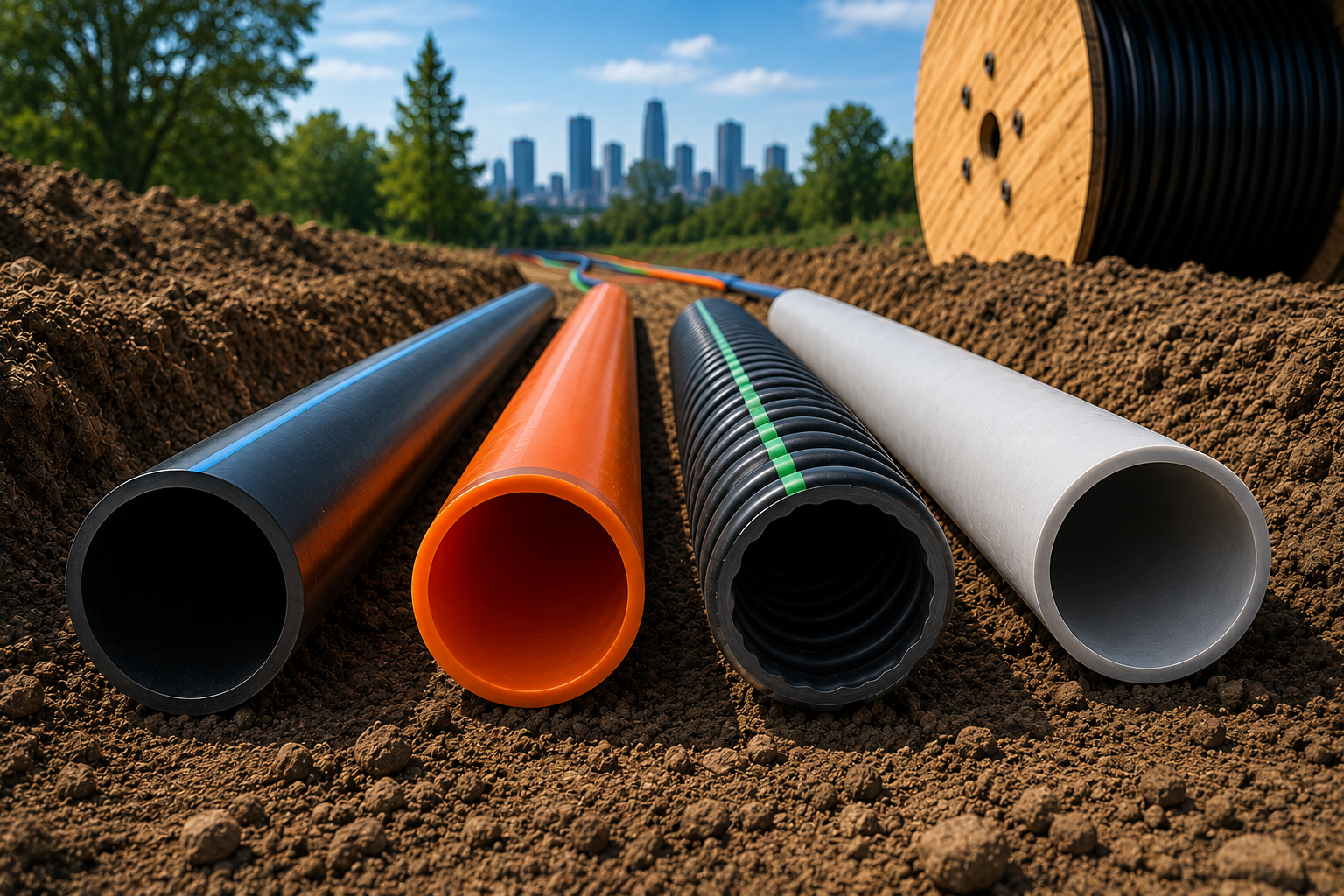
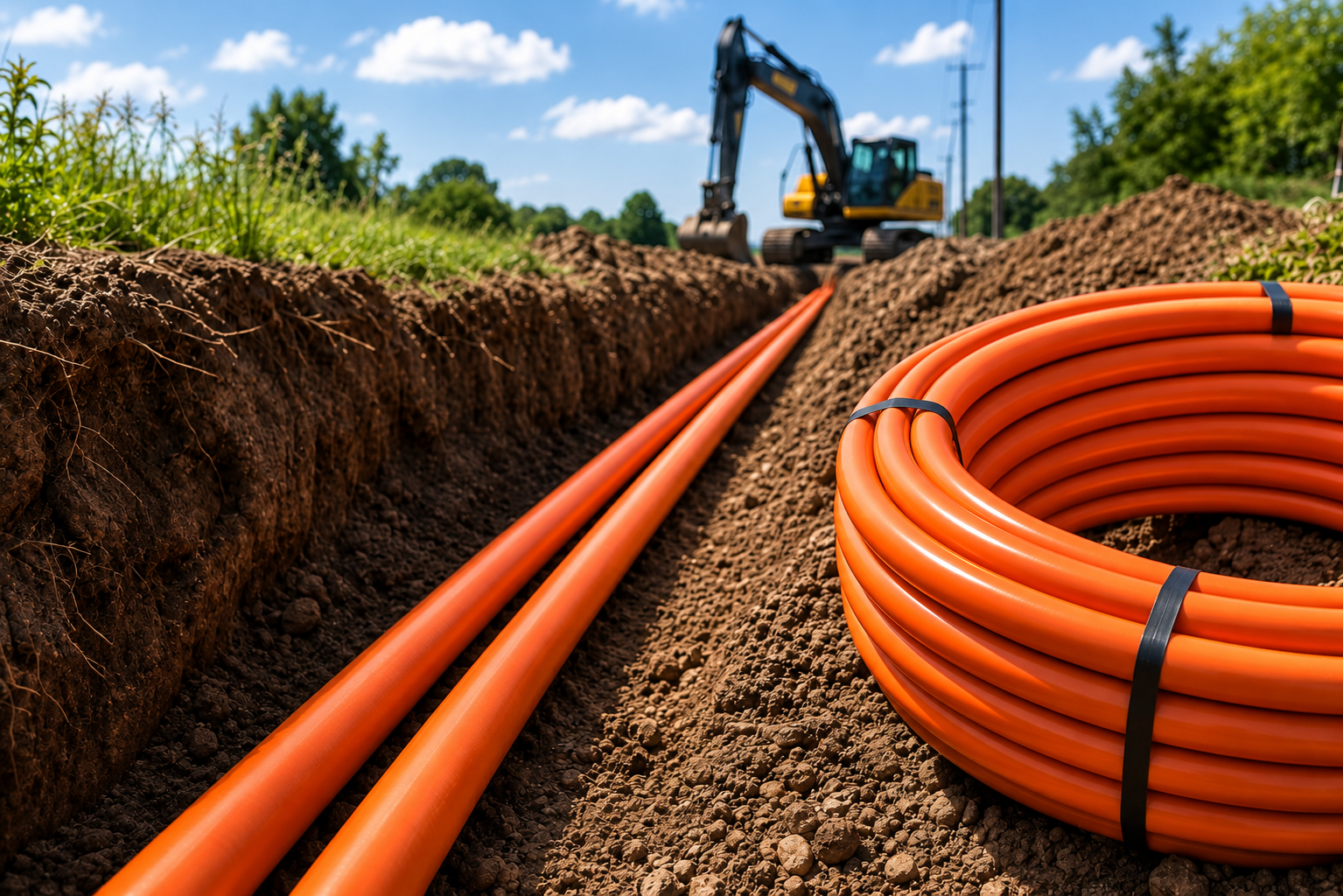
- Orange: Telecommunications, Fiber Optics, CATV, and Broadband.
- Red: Electric Power Utilities and Highway Lighting.
- Blue: Potable Water and Municipal Data Networks.
- Green: Sewer, Drainage, and Traffic Signal Controls.
- Black: General Utility Use and Long-Term Outdoor UV Exposure (formulated with carbon black to prevent photo-oxidation).
Is yellow HDPE pipe illegal for electrical use?
Regulatory Restriction: Solid yellow conduit jackets are strictly prohibited from manufacture for general conduit or telecom use because solid yellow polymer piping is legally reserved exclusively for natural gas distribution.
4. Wall Thickness & Dimension Ratios (SDR vs. Schedule)
What does SDR mean in HDPE pipe
Standard Dimension Ratio (SDR)
The Standard Dimension Ratio (SDR) is the ratio of the pipe’s average outside diameter (Do) to its minimum wall thickness (t):
SDR = Outside Diameter(Do) / Minimum Wall Thickness(t)
- The Inverted Scale Rule: A lower SDR number indicates a thicker pipe wall relative to its outer diameter. Thicker walls provide higher ring stiffness, crush resistance, and tensile pull strength, making them necessary for horizontal directional drilling (HDD) or heavy soil cover. Conversely, a higher SDR number represents a thinner wall suited for open trenching or light ground loads.
- Common Ratings: Standard wall schedules include SDR 9 (heavy wall for severe HDD pulls), SDR 11 (industry standard for plowing and directional boring), and SDR 13.5 (standard for open trenching and direct burial).
The structural ring stiffness, crush resistance, and allowable tensile pull force of HDPE conduit are dictated by wall thickness.
Schedule Sizing (Schedule 40 & Schedule 80)
Schedule sizing uses fixed wall thicknesses for each trade size. Unlike SDR profiles, the ratio of wall thickness to outside diameter changes as the pipe size increases. Smaller schedule pipes possess heavy walls relative to their diameter, whereas larger schedule pipes have proportionally thinner wall ratios.
5. Sizing Systems: Understanding Pipe Diameters
IPS, DIPS, CTS, or SIDR? Choosing the Right Sizing Standard
Conduit is manufactured to controlled outer or inner diameter standards to ensure compatibility with field couplings, bore casings, and installation hardware:
- IPS (Iron Pipe Size): The predominant sizing system for telecommunications and power distribution, matching standard steel pipe outside diameters.
- DIPS (Ductile Iron Pipe Size): Sized to match ductile iron pipe outside diameters, typically specified in heavy utility crossings.
- CTS (Copper Tubing Size): Sized based on copper tubing outside diameters, utilized for small service drops and microducts.
- SIDR / True ID: Sizing controlled by the inner diameter (ID) rather than the outer diameter, ensuring predictable internal clearance for specific cable bundles or casing fits.
6. Resin Quality and Physical Properties
High-performance telecommunication and electrical raceways require 100% virgin HDPE resin formulations. Post-consumer recycled (PCR) plastics introduce contaminants, molecular degradation, and volatile melt flow rates that compromise Environmental Stress Crack Resistance (ESCR) and risk field failures under ground stress. Clean internal regrind generated strictly within a closed-loop extrusion line is permitted under standards such as ASTM F2160.
Physical resin performance is classified under the ASTM D3350 Cell Classification system:
| Material Property | Description & Operational Importance | Standard Threshold |
|---|---|---|
| Density | Measures polymer crystallinity. Higher density increases tensile yield strength and flexural stiffness. | 0.941–0.955 g/cm³ (Class 3 High Density) |
| Melt Index (MI) | Evaluates molten flow properties. Lower melt index generally indicates higher molecular weight and improved crack growth resistance. | 0.05–0.40 g/10 min (190°C/2.16 kg) |
| Flexural Modulus | Measures resistance to wall deflection and bending under soil settlement or traffic loads. | 80,000–<160,000 psi |
| Tensile Yield Strength | Measures the tensile stress at which the material begins to yield. | 3,000–<4,000 psi |
| Stress Crack Resistance (ESCR) | Assesses long-term resistance to environmental stress cracking under sustained stress. | Condition B, >192 hours (Class 4 / ASTM D1693) |
7. Interior Wall Profiles & Coefficient of Friction
When placing fiber optic or copper conductors, the Coefficient of Friction (CoF) between the cable jacket and inner conduit wall dictates maximum pulling or blowing distances. Lower CoF prevents jacket burn-through and reduces required pulling tension:
- Smoothwall: Flat interior and exterior surfaces. Standard for direct burial, open trenching, and short-to-medium pulls.
- Interior Ribbed: Features raised longitudinal inner ribs co-extruded along the wall. Ribs convert flat surface contact into narrow parallel lines of contact, reducing drag and creating channels that promote turbulent airflow during air-assisted cable jetting.
- Factory-Applied Silicone Lubrication: Co-extruded permanent silicone lining on the interior wall that permanently lowers internal friction without drying out or reacting with cable jackets.
8. Packaging Options and Order Configurations
HDPE conduit can be configured during extrusion to match field equipment setups and streamline jobsite operations:
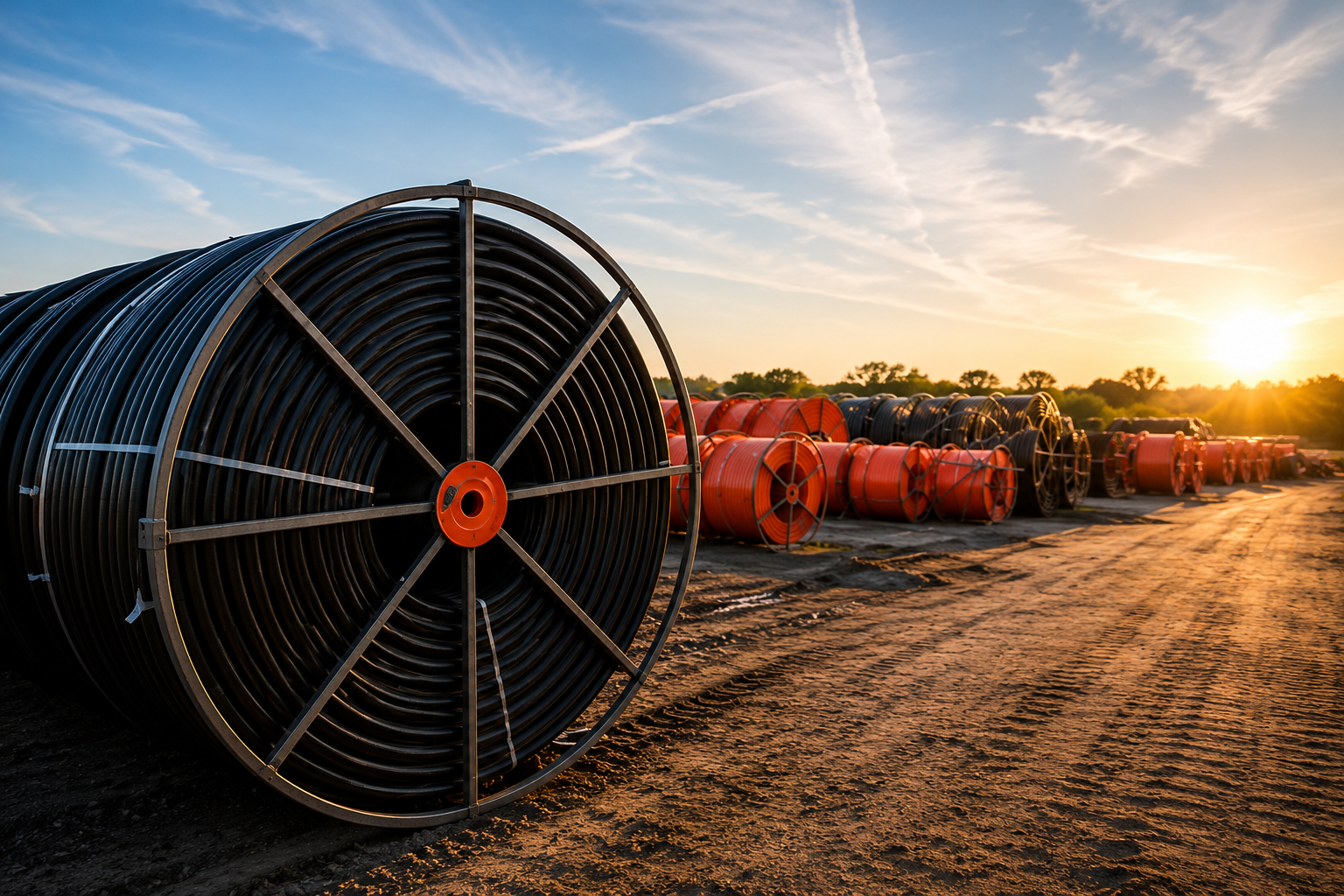
- Continuous Reels: High-footage continuous wood or steel reels that eliminate field joints over long directional drilling or plowing runs.
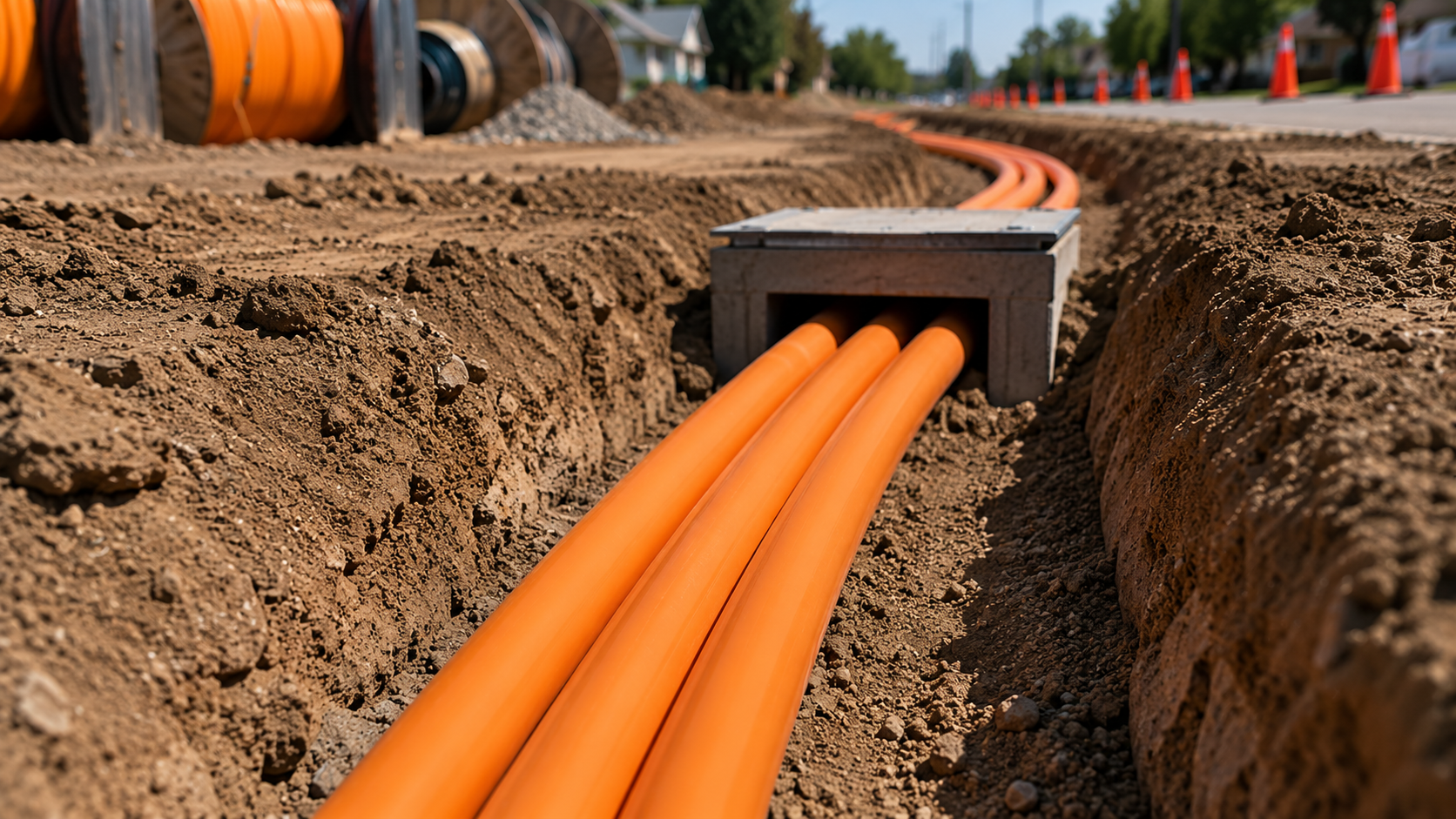
- Split Reels (Multi-Duct Packaging): Packages two, three, or four distinctly color-coded conduits side-by-side on a single shared reel, allowing installation crews to pull multiple pathways in a single pass. All conduits on a split reel must possess identical outer diameters to maintain equal payout tension.
- Rigid Stick Pipe: Straight 20-foot or 40-foot uncoiled lengths used for shallow utility trenches, bridge crossings, or urban rights-of-way where coiling memory is undesirable.
- Factory Pull Tape: Pre-installed woven polyester pull tape (rated at 1,250 lbs or 1,800 lbs tensile strength) loaded directly into the conduit during manufacturing.
Matching wall ratios, resin classifications, and interior profiles to field conditions protects underground infrastructure and minimizes total installed project costs.